Exploring Fishing Operations in Simulated Virtual Floating Offshore Wind Environments
Identifying barriers and crafting shared solutions to coexistence.
By leveraging a state-of-the-art maritime simulator with fishermen to test fishing gear around virtual floating offshore wind arrays, this work expands our efforts in advancing fisheries’ coexistence with floating offshore wind. Through literature reviews and conversations with fishermen, offshore wind developers, and floating offshore wind experts, we aim to develop simulated environments with the most realistic representations of what might exist in a future Gulf of Maine. With fishermen at the virtual helm, we collaboratively inform coexistence strategies between fisheries and floating offshore wind.
Project Goals:
- Engage fishermen to build a regional understanding of potential strategies to optimize coexistence between fisheries and floating offshore wind in the future.
- Enable fishermen to visualize and experience their fishing operation in a floating offshore wind environment so they can identify barriers and propose solutions to coexistence.
- Develop, test, and refine actionable recommendations for array layouts, spacing configurations, and gear innovations that enable safe fishing operations around floating offshore wind arrays.
- Create tools and resources that make the complexities of floating offshore wind more accessible to a broader range of stakeholders.
With the potential for floating offshore wind energy development in the Gulf of Maine — likely over a decade away — there are growing concerns from the fishing industry about potential conflicts with fishing and navigating within floating offshore wind arrays. In response, we are working on two separate, but interconnected projects that continue our work exploring how fishing operations and floating offshore wind can safely and effectively coexist in the Gulf of Maine.
Understanding Fishing Interactions: Gulf of Maine Fisheries and Floating Offshore Wind
Funded by the Massachusetts Clean Energy Center (MassCEC), this project engages commercial fishermen through research, stakeholder engagement, and hands-on simulation workshops to better understand how fishing gear types may operate within floating offshore wind arrays. Building on earlier engagement with Maine-based fishermen, the project focuses on Massachusetts and New Hampshire ports to strengthen regional understandings of floating offshore wind technology. The project team will conduct desktop research, stakeholder interviews, and develop new visual assets to illustrate the scale and operation of floating wind arrays.
In early 2026, fishermen will participate in a hands-on simulation workshop at the United States Maritime Resource Center (USMRC) in Middletown, RI, where they will be able to navigate trawl, purse seine, and longline vessels within simulated offshore wind environments. These opportunities intend to enable fisheries stakeholders to build a robust understanding of floating wind technology, positioning them to effectively engage in the offshore wind development process and ensure projects that are built reflect their priorities to the greatest extent possible. The project runs from August 2025 through July 2026.
Supporting Fisheries Access in the Gulf of Maine through Scenario-testing and Visual Simulations
This project funded by the Responsible Offshore Science Alliance (ROSA) involves local fishermen in testing diverse fishing gear types with different simulated floating offshore wind technologies, identifying operational challenges and refining solutions for improved compatibility. It builds on insights from the MassCEC-funded work, using iterative, scenario-based virtual simulation workshops to test and refine coexistence strategies across multiple gear types — including trawl, purse seine, longline, gillnet, lobster pots, and jigging machines. Ten participants will take part in two workshops. In the first, they will engage with baseline simulations to identify problems with fishing gear types in current wind array designs. The second workshop will improve designs and test new ideas based on fishermen’s feedback in the first workshop, ensuring a collaborative approach to exploring mutually beneficial coexistence strategies. This project extends from September 2025 through October 2027.
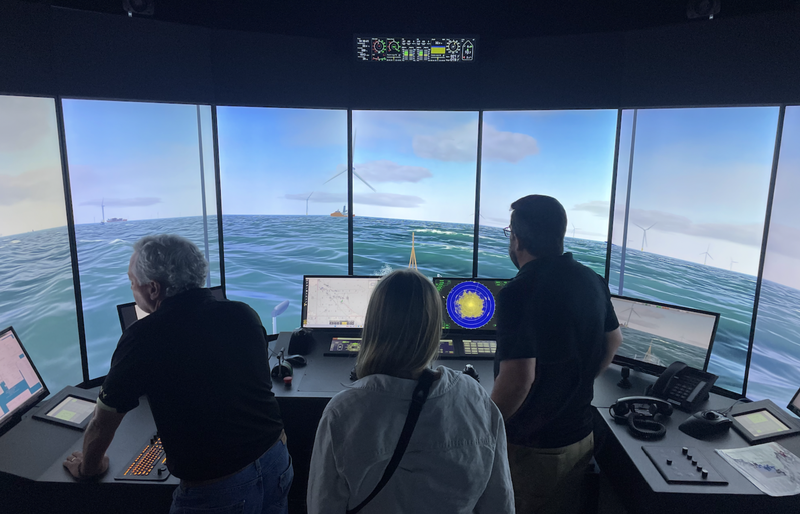
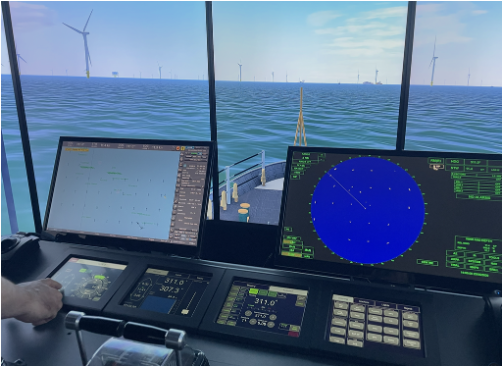
Both projects leverage USMRC’s maritime simulator, which allows participants to view and engage with different floating offshore wind mooring, platform, cable, and spacing configurations. The simulator replicates realistic sea conditions, weather, and wind infrastructure to safely test fishing operations within floating offshore wind arrays. Taken together, this work can help enable safe and effective coexistence between fisheries and floating offshore wind.
Project Team
Project Partner
Project Funders
Additional Supporter Information
MassCEC Project Supporters:
- Gloucester Fisheries Commission
- Cape Cod Commercial Fishermen’s Alliance
- Massachusetts Lobstermen’s Association
ROSA Project Supporters:
- National Offshore Wind Research & Development Commission
- University of Maine
- Invenergy
- Avangrid
-
Starting a Climate Committee: A Personal Guide
In 2024, while living in Woolwich, Dave Berndtson launched the town’s first climate resilience committee. He’s now a resident of Arrowsic (and a member of …
Perspectives
-
What does climate readiness look like for Maine’s towns?
Climate readiness looks different in every community, with each facing its own unique risks, priorities, and visions for the future. Through sustained relationships, place-based data, …
Perspectives
-
2025 Gulf of Maine Temperature Report
Over the past decade, our scientists have led a body of research that highlights temperatures in the Gulf of Maine. To keep you informed, we …
Reports
-
Atlantic Meridional Overturning Circulation (AMOC) 101
This 101 explainer breaks down what the AMOC is, how it influences climate, what scientists are observing now, and what a changing AMOC could mean …
Explainers