The Gulf of Maine’s Natural Carbon Keepers
Perspectives | Nov 16, 2026
From fish waste sinking to the seafloor to the mud of Maine’s tidal flats, the Gulf of Maine has been quietly storing carbon for us all along. Here’s how our scientists are working to understand and protect these natural carbon keepers in a fast-changing Gulf.
Somewhere in the Gulf of Maine right now, a fish has just caught a meal near the surface. Its prey, the unfortunate loser of that food chain battle, is now going through the unenviable process of being digested. The meal gives the predator a bit of temporary nutrition, and whatever its body can't use is expelled as waste. As that waste sinks, it carries carbon that was once part of the prey from the surface into deep water, where it can be stored away from the atmosphere.
That unglamorous moment is one element of a larger process called carbon sequestration, and it is happening all around the Gulf. It also happens through other processes, like plants taking in carbon and then storing it in the soil as their matter decays. Through these and many other pathways, in salt marshes and eelgrass meadows, in the mud of tidal flats, and in the plankton drifting through open water, natural systems have been quietly storing carbon for us all along.
The ocean and our coastal habitats are Earth’s largest carbon sink, absorbing roughly 25 to 30 percent of the carbon humans emit each year. When carbon dioxide builds up in the atmosphere, it traps heat and warms the planet. Carbon that stays locked in coastal sediments and the deep ocean is carbon that isn’t in the atmosphere trapping heat, which makes understanding the ocean essential to slowing climate change.
At the Gulf of Maine Research Institute, our scientists are working to understand how much carbon these habitats store and how that is changing. Because, unfortunately, as these habitats degrade due to sea level rise and other human impacts, they release the carbon they’ve stored for hundreds of years. We are also exploring ways to protect these natural carbon storage systems so they can continue protecting our coastal communities from the impacts of climate change.
Meet the Carbon Keepers
The Gulf of Maine is warming at nearly three times the rate of the world's oceans at the surface. As the environment changes, the habitats and food webs that store carbon are changing too.
Near the coast
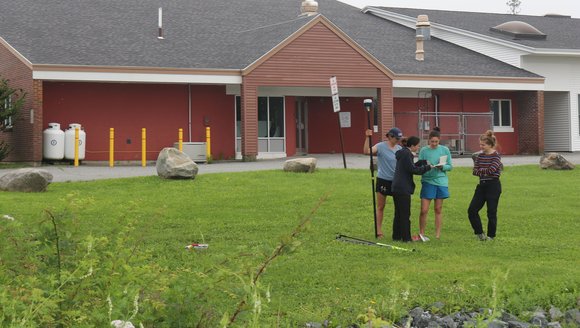
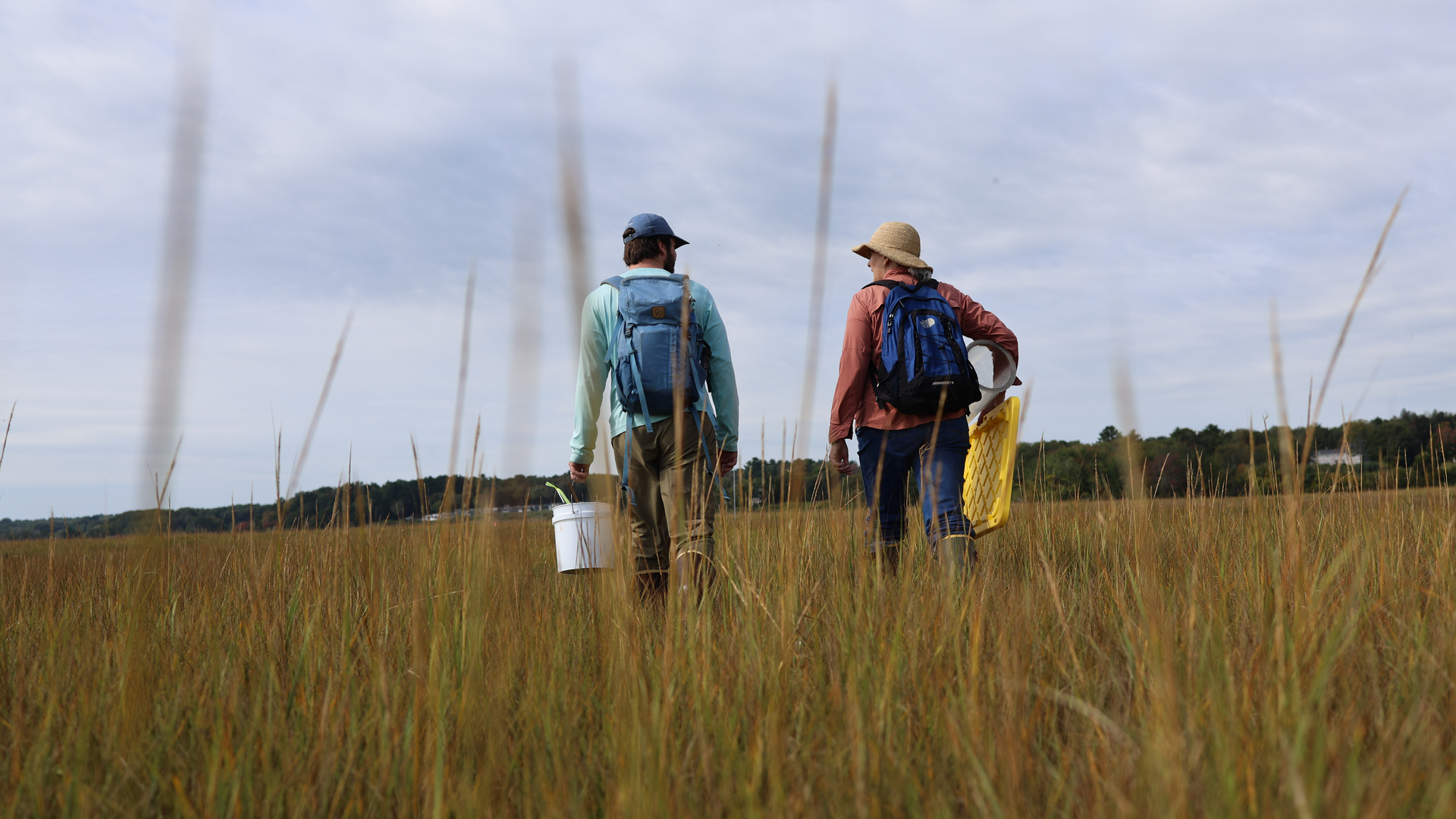
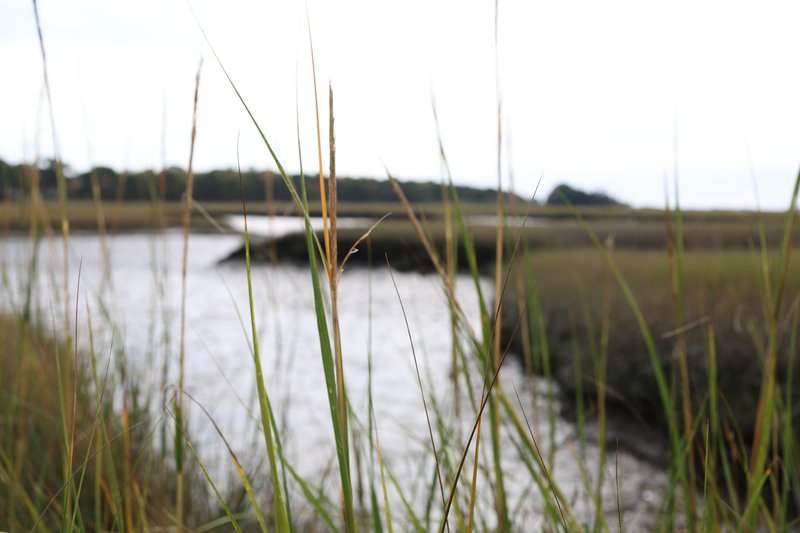
Acre for acre, salt marshes are among the most effective carbon stores on Earth. They hold 20 to 30 times more carbon per square meter than terrestrial forests, much of it in their waterlogged soils. GMRI scientist Claire Enterline is working with partners, including Bev Johnson at Bates College, to measure greenhouse gases moving into and out of Maine's salt marshes. Their research is helping clarify how human changes to marshes, such as undersized culverts at road crossings or tide gates, can weaken a marsh's ability to store carbon. She is also working with a large collaborative team, including Ducks Unlimited, Wells National Estuarine Research Reserve, Bates College, and the Universities of New Hampshire and Maine, to assess how marsh restoration efforts may help improve both the ecological health of the marsh and its ability to sequester carbon.
A healthy marsh stores carbon, provides habitat for birds and fishes, and buffers communities from storms, but only if it gets enough tidal flow and sediment to keep up with rising seas. At the Webhannet marsh in Wells, we’re excited to be working with partners to understand how restoration methods like removing tidal restrictions, improving flow on the marsh surface, and thin-layer placement can restore that resilience and carbon storage, so that information can guide restoration and infrastructure decisions elsewhere.
Claire Enterline Program Manager
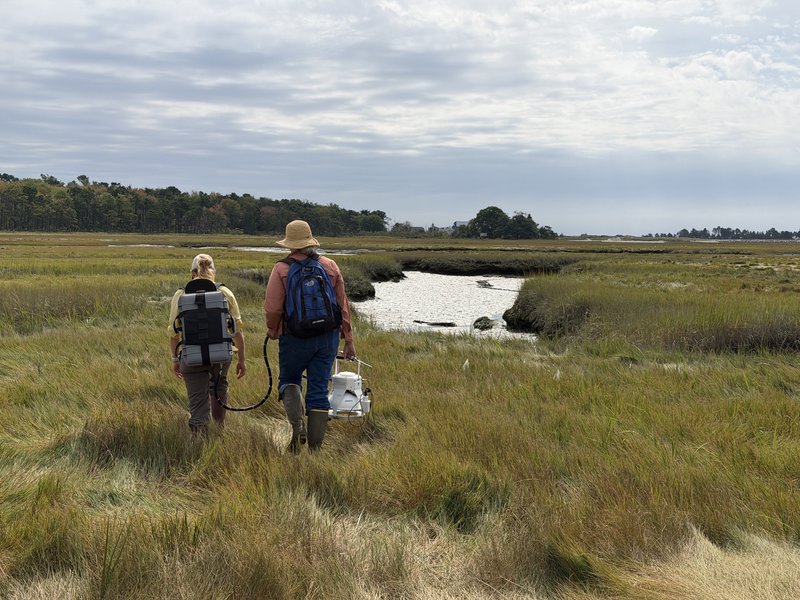
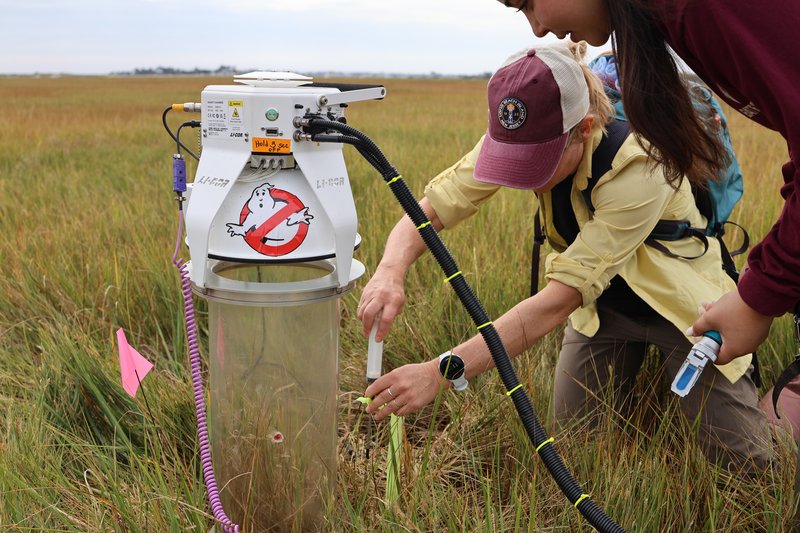
Those choices matter even more in a fast-changing Gulf. With two to 6.1 feet of sea level rise, state biologists estimate Maine could see a net loss of 73 to 83 percent of its salt marsh habitat. When these marshes are degraded or lost, carbon held in their soils can be released back into the atmosphere.
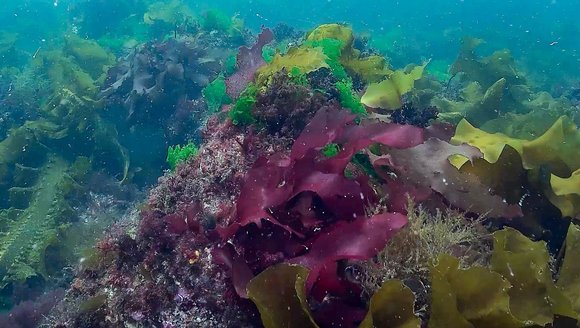
In shallow waters along the coast, eelgrass meadows store carbon too. Seagrasses like eelgrass cover less than one percent of the ocean's surface, yet they account for an estimated 10 to 15 percent of the carbon stored in the ocean. Maine's eelgrass is also under pressure. Maine DEP’s Marine Vegetation Mapping Program estimates that coverage declined 54 percent in Casco Bay between 2018 and 2022, and 60 percent in the Midcoast region between 2005 and 2023.
My time studying salt marshes has shown me how vital they are for storing carbon and protecting our shores. Partnering with GMRI carbon and coastal scientists strengthens our knowledge of nature based climate solutions.
Beverly Johnson, Ph.D. Charles A. Dana Professor of Earth and Climate Sciences Bates College
Warmer water, nutrient runoff, and invasive green crabs are all known to harm eelgrass. With support from the Casco Bay Estuary Partnership and private foundations, Claire is working with biologists and remote sensing experts at Maine DEP, Nearview LLC, Duke University, and a former GMRI colleague now at the Universidad del Desarrollo in Chile to develop methods to track how Maine's eelgrass and marshes are changing over time, to understand what is driving these shifts and what they mean for carbon storage.
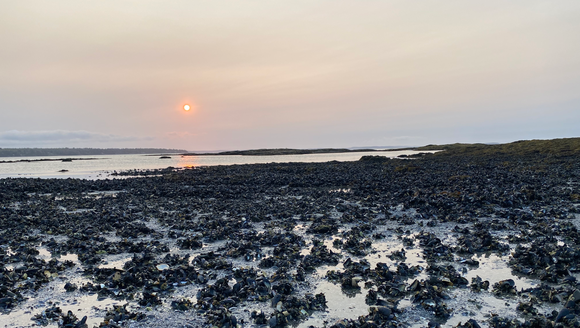
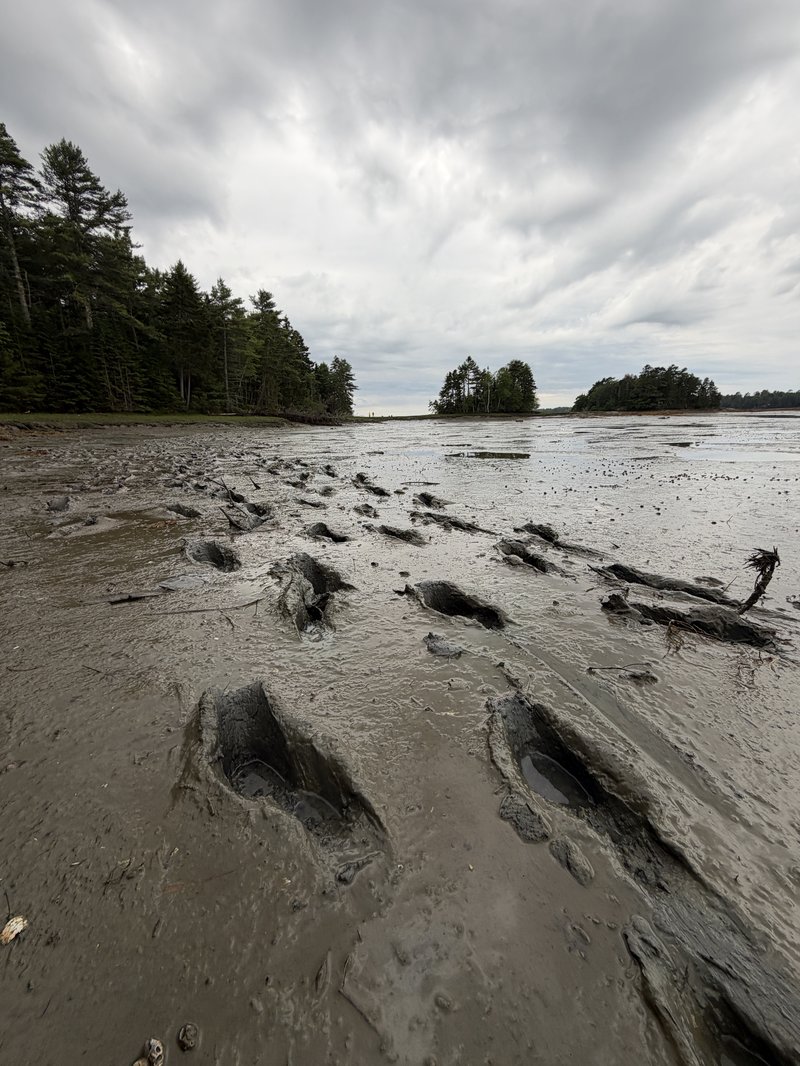
Studies in Maine and New Hampshire have found low marsh areas converting to mud flats and marsh plants shifting toward species that tolerate more frequent flooding. As marshes convert to mud flats, tidal flats are becoming an even more important part of the coastal carbon picture. Tidal flats, sometimes called mud flats, are gently sloping stretches of sand or mud along the shore that have no rooted vegetation. They help protect the coast from wave damage and erosion, provide habitat for softshell clams, quahogs, sandworms, shorebirds, and juvenile fish, and store carbon. Yet estimates of how much carbon tidal flats hold are sparse compared to other coastal habitats.
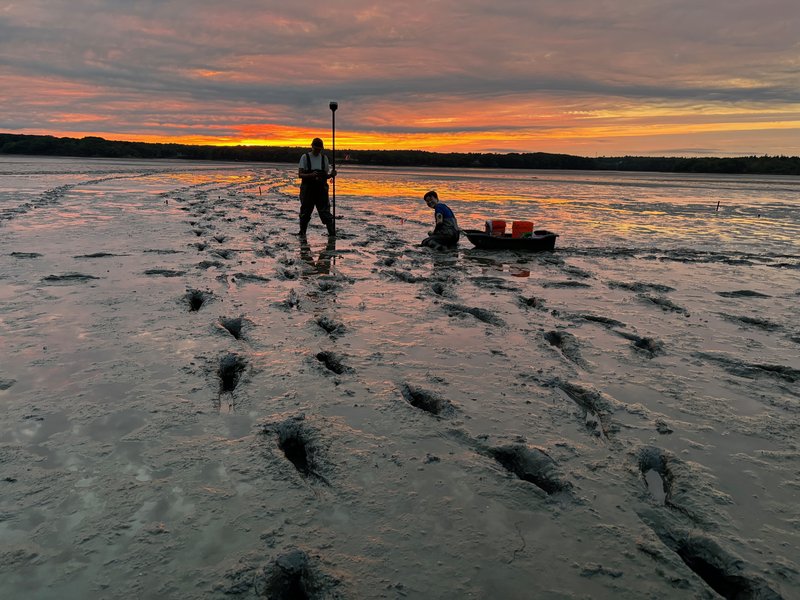
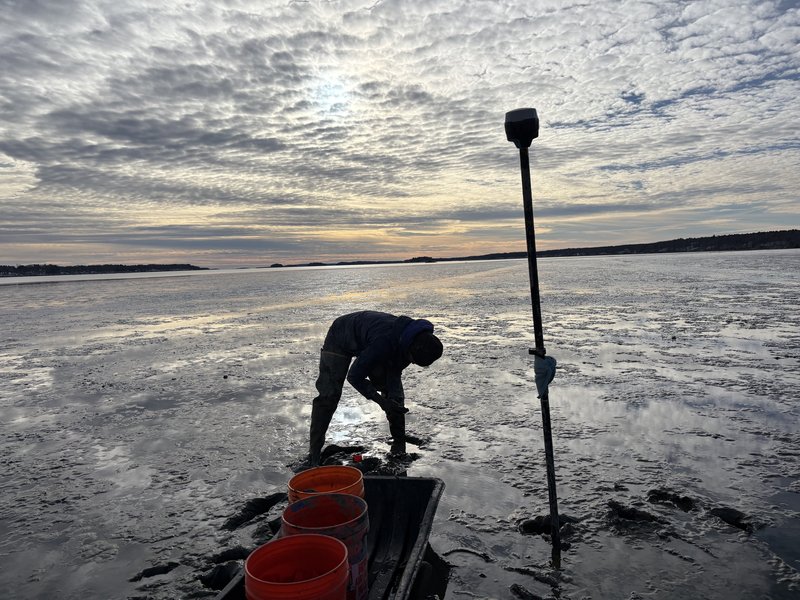
GMRI scientist Dr. Hannah Baranes is working with collaborators at the University of Massachusetts Amherst and Manomet Conservation Sciences to produce the first estimate of how much carbon is stored in tidal flats along the U.S. Gulf of Maine coast, from Massachusetts to Maine. Recognizing carbon storage alongside the fisheries, cultural, and ecological value of tidal flats can also strengthen the case for conserving and restoring them.
In open water
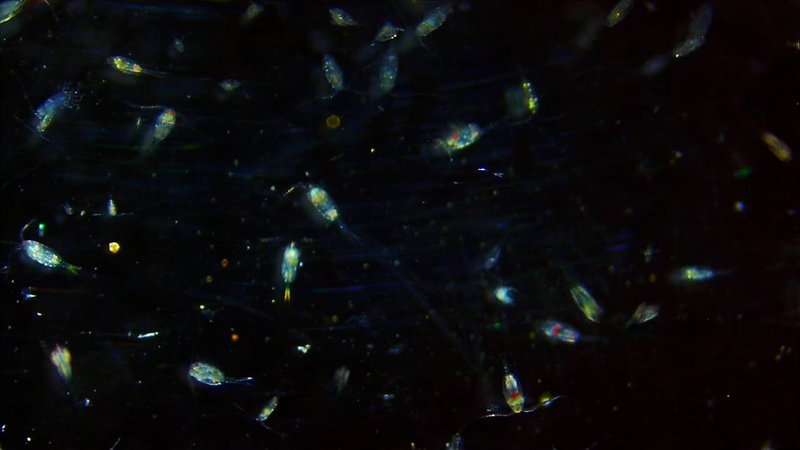
In open water, carbon moves through the food web. Near the surface, microscopic organisms called phytoplankton absorb carbon dioxide through photosynthesis, much like plants on land. When phytoplankton die, some of that carbon sinks to deeper water. Much of the rest moves up the food web as phytoplankton are eaten by zooplankton, which are in turn eaten by fish. At each step, some carbon sinks as waste or dead organic matter, just like in our opening example.
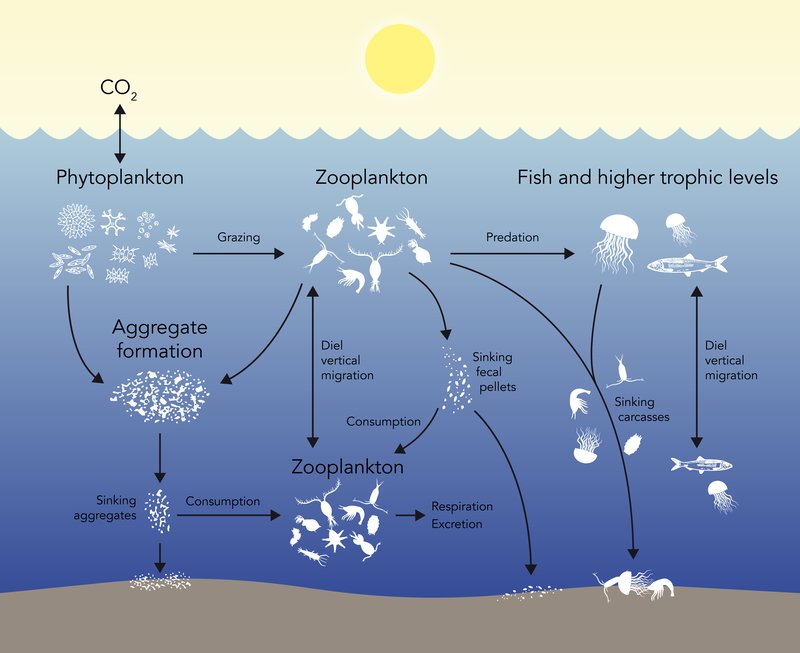
Many marine animals also migrate up and down the water column each day, carrying carbon from the surface into deeper water. You can learn more about how this works in our Carbon Sequestration 101 explainer.
Scientists call this the biological carbon pump, and it is one of the most important natural processes keeping carbon dioxide out of the atmosphere. Without it, the atmosphere would hold far more carbon dioxide, and the planet would be warming even faster.Senior Scientist Dr. Jérôme Pinti, and postdoctoral researcher Connor Shea are working with collaborators around the world to understand how much carbon fish transport into the deep ocean and how fishing may affect that process. Jérôme and his colleagues recently published a paper on how the biological carbon pump works and the economic value of keeping it functioning.
A healthy biological pump is good for much more than just carbon storage. In the open ocean, the biological pump is the dinner bell for the deep sea, supplying food and energy to unique deep-sea creatures and many of the fishes that make their way to our dinner tables. But unchecked degradation of these systems via pollution or overfishing endangers their ability to continue providing these services.
Connor Shea Postdoctoral Research Associate, Biological Oceanography Lab
A warming climate is changing how the open ocean takes up carbon too. Warmer water holds less dissolved carbon dioxide, which limits how much the ocean can absorb directly from the atmosphere. Warming also strengthens the layering of the ocean, which keeps deep, nutrient-rich water from rising to the surface. Those nutrients fuel the phytoplankton at the base of the biological carbon pump, so a warmer ocean can mean less productivity and less carbon carried into the deep sea.
Science that shapes decisions
Understanding how much carbon these habitats hold, and how that is shifting, matters most when it reaches the people who are impacted by or manage Maine's coast and ocean. Decisions about where to restore a marsh, how to plan coastal infrastructure, or how to manage fisheries can all affect how much carbon the Gulf is able to store. That is why our scientists work with partners, including state agencies, to put their findings to use.
In Maine, that work is already underway. The state was the first in the country to include blue carbon in its annual carbon accounting. Claire serves on the steering committee of the Maine Blue Carbon Network and helps compile the coastal carbon sequestration estimates that support the Maine Department of Environmental Protection's biennial greenhouse gas emissions report.
However, not every habitat is counted yet. The state rule that guides this accounting specifies methods for salt marshes, eelgrass, and seaweeds, but not tidal flats. Hannah's estimate is an important first step toward closing that gap. Researchers still need to learn how quickly carbon builds up in or erodes from tidal flats, and how carbon and sediment move among coastal habitats. Jérôme's work with international collaborators explores whether fishing practices could be managed in ways that also support the ocean's natural carbon storage.
These habitats also support Maine's blue economy. The same places that store carbon support shellfish harvests like softshell clams, provide habitat for juvenile fish, and help protect coastal infrastructure from waves and erosion. Keeping them healthy supports the harvesters, fishermen, and coastal communities whose livelihoods depend on the Gulf.
The Gulf of Maine was storing carbon long before anyone was measuring it. Understanding how much it holds, how that is changing, and how our choices affect it is a practical way to manage carbon in a warming world.
Working alongside partners from Maine and collaborators around the world, our scientists are building that understanding now. The goal is to make sure it reaches the people making decisions about the Gulf of Maine's coast and ocean, while there is still time to protect what the Gulf already does for us.